
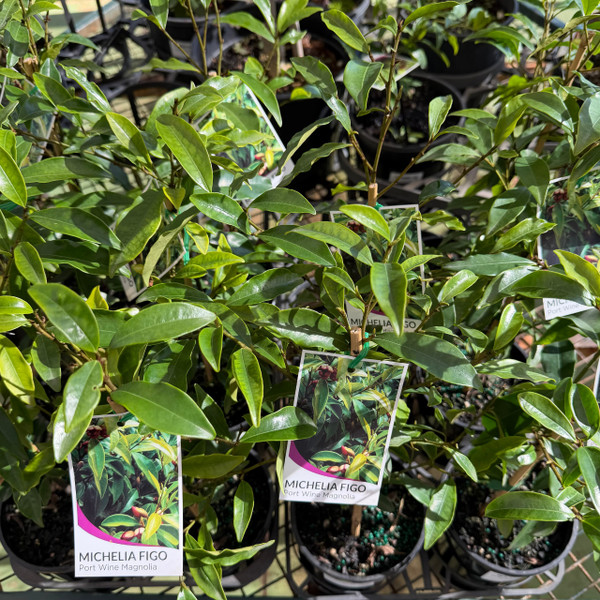

Product details
Product Overview
Michelia figo Port Wine Magnolia is a compact evergreen shrub known for its dense, glossy foliage and unique, sweetly-scented flowers. A versatile addition to gardens, it’s ideal for hedging, screening, or as a feature plant in small or medium spaces.
Growth:
Port Wine Magnolia typically grows to a height of 1.5 to 3 metres and a width of about 1.5 metres. Its moderate growth rate allows for easy shaping and maintenance.
Light Requirements:
Thrives in full sun to partial shade. Full sun encourages maximum flowering and dense foliage, while partial shade helps maintain a healthy, lush appearance in warmer climates.
Soil Requirements:
Prefers well-drained, fertile soils enriched with organic matter. Adapts to sandy, loamy, or clay soils and performs best in slightly acidic to neutral pH conditions.
Water Requirements:
Requires regular watering during the establishment phase. Once mature, it is moderately drought-tolerant but benefits from occasional deep watering during prolonged dry periods.
Frost Tolerance:
Hardy to frost, making it well-suited to Australian climates, including cooler regions. Protect younger plants in areas prone to severe frost for optimal growth.
Drought Tolerance:
Once established, Port Wine Magnolia can withstand dry periods. However, supplemental watering during extended drought helps maintain its lush foliage and flower production.
Flowering Information:
Blooms appear from late winter through spring, featuring small, cup-shaped flowers that are cream-coloured with maroon edges. The flowers release a distinctive fragrance often compared to port wine or bananas, adding a sensory element to gardens.
Spacing Requirements:
For hedging, space plants 1 to 1.5 metres apart to achieve a dense, uniform hedge. Proper spacing supports healthy growth and airflow.
Fertiliser Requirements:
Apply a slow-release, balanced fertiliser in early spring to encourage new growth and promote flowering. Avoid over-fertilising, as this can lead to excessive foliage at the expense of flowers.
Care and Maintenance:
Minimal maintenance is required. Light pruning after flowering helps maintain shape and encourages denser growth. Mulch lightly around the base to conserve moisture and improve soil health, ensuring mulch does not touch the trunk to prevent rot.


