
Product details
Product Overview
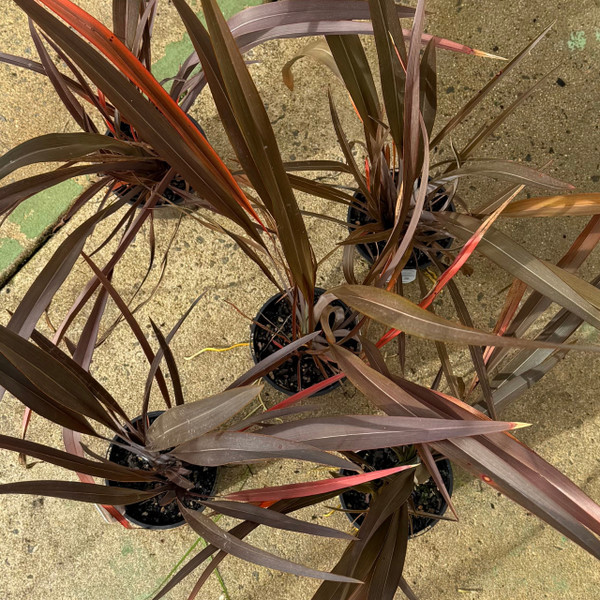
Phormium tenax Purpurea - commonly known as Purple New Zealand Flax, is an evergreen perennial known for its striking, sword-like foliage in deep purplish-red hues. This hardy plant is an excellent choice for adding dramatic colour and texture to garden landscapes, particularly in mixed borders, verges, and large containers.
Growth:
Typically reaches a height of 1.5 to 3 metres and spreads up to 1-1.2 metres. The plant forms dense, upright clumps of rigid leaves that arch gracefully, providing a strong architectural element in the garden.
Light Requirements:
Prefers full sun but can tolerate part shade. It performs best in sunny positions where the foliage colour is more vibrant. In hotter climates, some afternoon shade is beneficial to prevent leaf scorch.
Soil Requirements:
Grows well in well-drained soils and is adaptable to a range of soil types, including clay, loam, and sandy soils. It can thrive in acidic, neutral, or alkaline conditions, provided drainage is good.
Water Requirements:
Requires minimal watering once established. It is drought-tolerant but benefits from occasional deep watering during prolonged dry spells to maintain healthy growth.
Frost Tolerance:
Moderately frost-hardy, making it suitable for a wide range of climates across Australia. It can withstand light frosts but may need protection in areas with severe winters.
Drought Tolerance:
Exhibits excellent drought tolerance once established. Regular watering during extended dry periods will help maintain its vibrant foliage and overall health.
Flowering Information:
Produces tall flower spikes up to 3 metres high, with tubular red or yellow flowers in late spring to summer. The flowers are not fragrant but attract birds, particularly nectar-feeding species like honeyeaters.
Spacing Requirements:
Plant 1-1.2 metres apart for mass planting or as a feature plant. This spacing allows the plant to establish well and achieve its full form without overcrowding.
Fertiliser Requirements:
Apply a balanced fertiliser in early spring to support growth and maintain vibrant foliage. Minimal feeding is required once established, as this plant is generally low-maintenance.
Care and Maintenance:
Minimal pruning is needed. Remove dead or damaged leaves as necessary to maintain a tidy appearance. Mulching around the base can help retain soil moisture and suppress weeds, especially in garden beds.