

Product details
Product Overview
Diospyros virginiana, commonly known as the American persimmon or common Persimmon is a deciduous tree native to the eastern United States. Renowned for its sweet, edible fruit and distinctive, blocky bark, this species has been cultivated for centuries and can adapt well to various climates, including those found in Australia.
Growth:
The American persimmon typically reaches heights of 10 to 18 metres, with a spread of 7 to 10 metres. It exhibits a rounded to conical crown with drooping branches. The tree's bark is dark and deeply fissured, resembling alligator skin, which adds ornamental value to landscapes. Leaves are oval-shaped, dark green in summer, turning to shades of yellow and orange in autumn.
Light Requirements:
This species thrives in full sun to partial shade. For optimal fruit production, planting in a location that receives at least six hours of direct sunlight daily is recommended. While it can tolerate partial shade, reduced sunlight may lead to diminished fruit yields.
Soil Requirements:
American persimmons are adaptable to a variety of soil types, including loamy, sandy, and clay soils, provided they are well-draining. The tree prefers slightly acidic to neutral pH levels but can tolerate a range of soil conditions. Incorporating organic matter, such as compost, can enhance soil fertility and structure, promoting healthy growth.
Water Requirements:
During the establishment phase, regular watering is essential to encourage deep root development. Once established, the tree exhibits moderate drought tolerance but benefits from consistent moisture, especially during prolonged dry periods. Mulching around the base helps retain soil moisture and regulate soil temperature.
Frost Tolerance:
Diospyros virginiana is hardy and can withstand temperatures down to -30°C, making it suitable for a range of Australian climates, including regions that experience frost. Its resilience ensures reliable performance and fruiting even after cold winters.
Drought Tolerance:
Once established, the American persimmon demonstrates good drought tolerance. However, for optimal fruit production and tree health, supplemental watering during extended dry spells is beneficial. Maintaining adequate soil moisture supports consistent fruiting and reduces stress on the tree.
Flowering and Fruiting Information:
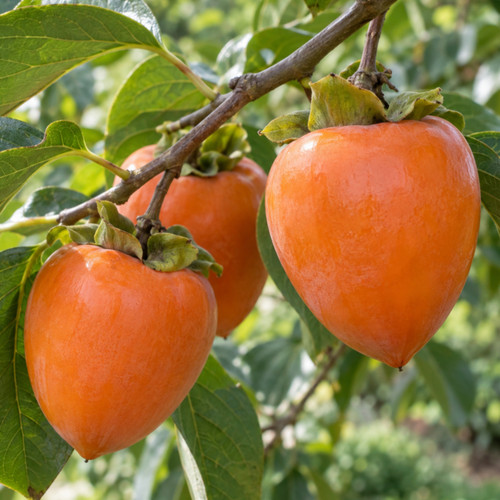
Flowering occurs in late spring to early summer, with small, fragrant, bell-shaped flowers. Male and female flowers typically grow on separate trees (dioecious), so both male and female trees are necessary for fruit set, unless a self-fertile cultivar is planted. The fruit matures in autumn, turning from green to orange or reddish-purple when ripe. The sweet, flavourful fruit is enjoyed fresh or used in various culinary applications, such as jams, jellies, and baked goods.
Pollinators:
Bees, including honeybees and native solitary bees, are the primary pollinators of American persimmon flowers. Their activity is crucial for fruit set, especially in orchards or gardens where both male and female trees are present. Encouraging a healthy pollinator population can enhance fruit yield and quality.
Spacing Requirements:
When planting multiple trees, space them approximately 6 to 10 metres apart to accommodate their mature size and ensure adequate air circulation. Proper spacing reduces the risk of disease and allows each tree to develop a healthy canopy, facilitating better fruit production.
Fertiliser Requirements:
In early spring, applying a balanced, slow-release fertiliser can promote vigorous growth and enhance fruiting. Avoid excessive nitrogen, as it may encourage leaf growth at the expense of fruit production. A soil test can provide specific insights into nutrient needs, allowing for tailored fertiliser applications.
Care and Maintenance:
Pruning during late winter helps maintain the tree's shape, removes dead or diseased wood, and promotes better air circulation within the canopy. Regular monitoring for pests and diseases, such as leaf spot or scale insects, is advisable. Implementing proper sanitation practices, like removing fallen leaves and fruit, can help prevent disease spread. Mulching and adequate watering during dry periods support overall tree health.