

Product details
Product Overview
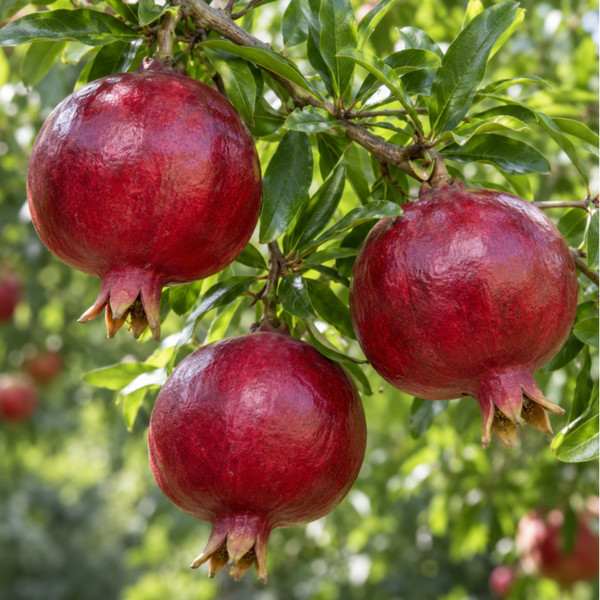
Pomegranate Braham is a productive and highly ornamental deciduous fruit tree prized for its sweet, juicy fruit, colourful flowers and attractive foliage. Well suited to hot, dry Australian climates, it produces medium-sized fruit with reddish to dark skin and rich deep red flesh that is excellent for eating fresh, juicing, salads and cooking.
Growth:
Pomegranate Braham develops as a compact, shrubby tree, typically growing approximately 2.5 to 3 metres in height. It naturally forms multiple stems but can be trained as a single-trunk tree or maintained as a bushy shrub. Regular pruning can keep the tree compact and make harvesting easier.
Light Requirements:
Braham performs best in full sun, where it will produce the strongest growth, flowering and fruit crops. A warm, open position with plenty of sunlight is ideal.
Soil Requirements:
Pomegranates are adaptable to a range of soil types but perform best in moderately fertile, well-drained soil enriched with organic matter. Good drainage is important, particularly during winter. Established trees are tolerant of relatively dry and alkaline conditions.
Water Requirements:
Water regularly during establishment, particularly through the first few summers. Once established, Braham requires considerably less water, although consistent moisture during flowering and fruit development will help improve fruit size and quality. Avoid prolonged waterlogging around the root system.
Frost Tolerance:
Pomegranate Braham has good frost tolerance once established. As a deciduous tree it naturally loses its leaves during winter and handles cold conditions well, although young plants may benefit from protection from severe frost while becoming established.
Drought Tolerance:
Braham has very good drought tolerance once established and is well suited to areas with hot, dry summers. Occasional deep watering during extended dry periods will encourage stronger growth and better fruit development.
Flowering and Fruiting Information:
Bright orange to red flowers appear through spring and are followed by medium-sized pomegranates with reddish to dark skin and deep red flesh. The fruit is sweet, juicy and richly flavoured. Braham generally ripens from March through to May, with timing varying according to local climate and seasonal conditions.
Pollinators:
Pomegranate Braham is self-fertile, so a single tree is capable of producing fruit. Bees and other pollinating insects assist with pollination, and planting more than one pomegranate can help improve overall fruit set.
Spacing Requirements:
Allow approximately 3 to 4 metres between trees to provide room for canopy development, good airflow and access for harvesting. Trees can be planted closer when maintained as a hedge or regularly pruned.
Fertiliser Requirements:
Apply a balanced fruit-tree fertiliser during spring as new growth begins. Established trees can benefit from additional feeding during the growing season, along with compost or well-aged organic matter around the root zone. Avoid excessive nitrogen, which can encourage leafy growth at the expense of flowering and fruit production.
Care and Maintenance:
Prune during winter to maintain the desired size and shape, remove weak or crossing branches and improve airflow through the canopy. Remove unwanted suckers from around the base if training the plant as a tree. Mulch around the root zone to conserve moisture and suppress weeds, keeping mulch clear of the trunk.
