
Product details
Product Overview
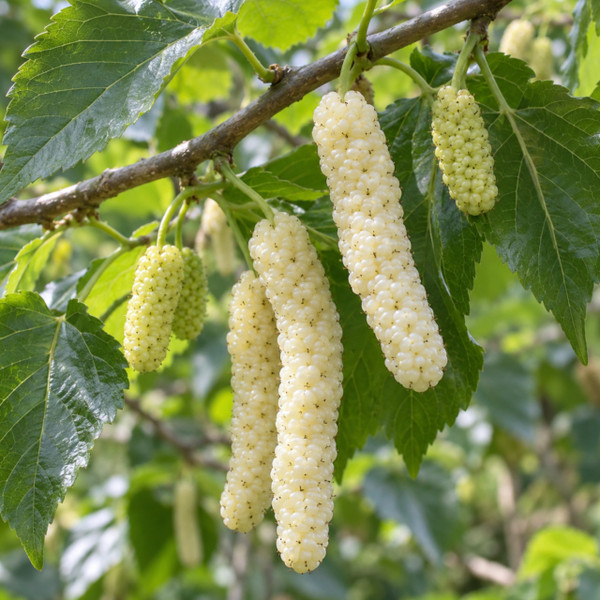
Mulberry White Shahtoot or King White Mulberry, is a prized fruit tree renowned for its long, honey-sweet, white fruits and attractive weeping habit. Originating from regions such as Tibet and the Himalayas, this variety has become popular in Australian gardens for its non-staining fruit and adaptability to various climates.
Growth:
White Shahtoot Mulberry trees are medium-sized, typically reaching heights of 4 to 6 metres, though they can grow taller under optimal conditions. They exhibit a subtle weeping shape, which can be enhanced through pruning and training, making them suitable for small gardens and even large pots.
Light Requirements:
This variety thrives in full sun, requiring at least six hours of direct sunlight daily to ensure healthy growth and abundant fruit production.
Soil Requirements:
White Shahtoot Mulberries prefer well-drained, fertile soils enriched with organic matter. Incorporating compost or aged manure enhances soil structure and fertility. Good drainage is essential to prevent root rot.
Water Requirements:
Regular watering is crucial during the tree's establishment phase and throughout the growing season. Deep watering once a week is generally sufficient, but adjustments may be necessary based on rainfall and soil conditions. Applying mulch around the base helps retain moisture and suppress weeds.
Frost Tolerance:
White Shahtoot Mulberry trees are hardy and can tolerate light frosts, making them suitable for a range of Australian climates. Young trees may require protection from severe frosts until fully established.
Drought Tolerance:
Once established, White Shahtoot Mulberry trees can withstand short periods of drought. However, consistent watering during prolonged dry spells ensures fruit quality and overall tree health.
Flowering and Fruiting Information:
White Shahtoot produces small, inconspicuous flowers in spring, followed by long, white fruits that can reach up to 10 centimetres in length. The fruit ripens progressively from late spring through summer, typically from October to December. When fully ripe, the berries are honey-sweet and non-staining, making them ideal for fresh eating, drying, or use in desserts.
Pollinators:
This variety is self-pollinating and does not require a companion tree to produce fruit.
Spacing Requirements:
For optimal growth and air circulation, space White Shahtoot Mulberry trees approximately 4 to 6 metres apart. This spacing accommodates their mature size and facilitates maintenance activities like pruning and harvesting.
Fertiliser Requirements:
Fertilise in early spring with a balanced fertiliser to support healthy growth and fruit production. Avoid excessive nitrogen, as it can promote vegetative growth at the expense of fruiting. Mulching helps retain moisture and improve soil health.
Care and Maintenance:
Prune during the dormant season to remove dead or overcrowded branches and to shape the tree. Regular pruning encourages new growth, as fruit is produced on the current season’s wood, and helps maintain the tree at a manageable size. Monitor for pests and diseases common to fruit trees, such as scale or fungal infections, and address promptly. Mulching aids in conserving moisture and improving soil health.