

Product details
Product Overview
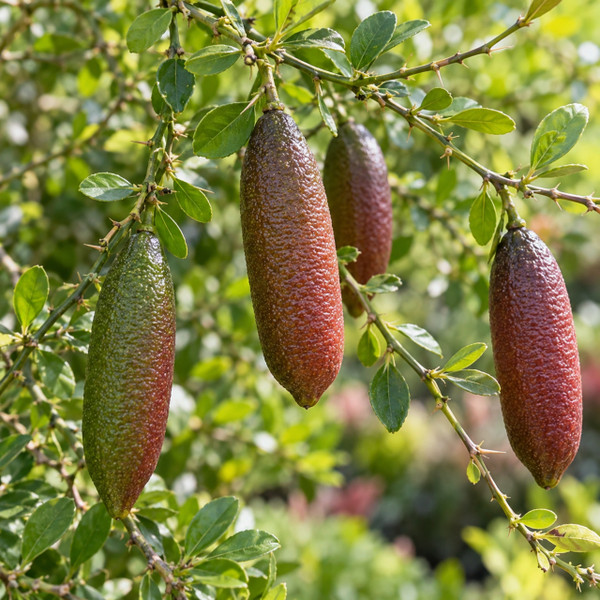
Microcitrus australasica Finger Lime Pink Ice is an eye-catching Australian native citrus, renowned for its elongated fruit filled with shimmering, pink-hued pulp. Often dubbed citrus caviar, the tiny vesicles provide a vibrant pop of flavour reminiscent of Ruby grapefruit—tangy yet subtly sweet—making them perfect for garnishing drinks, seafood, or sweet treats. Beyond the kitchen, this compact, evergreen shrub brings ornamental charm to Australian gardens and containers with its fine foliage and delicate seasonal blooms.
Growth:
Pink Ice typically grows to around 2–3 metres in height, forming an upright, somewhat bushy canopy. Slender, spined branches are a hallmark of its rainforest origins. With light pruning, you can maintain a more open shape for simpler harvesting and care. Under ideal conditions, Pink Ice reliably produces cylindrical fruit packed with bead-like vesicles.
Light Requirements:
Full sun—at least six hours daily—is recommended for healthy growth and steady fruit production. In cooler regions, choose a north-facing spot to maximise warmth and sunlight. While Pink Ice tolerates a bit of partial shade, abundant sun helps enhance both flavour intensity and total yield.
Soil Requirements:
A well-drained, slightly acidic soil enriched with organic matter suits Pink Ice best. Improve heavier soils by incorporating compost or opt for raised beds. When growing in pots, use a high-quality citrus or native potting mix that balances moisture retention with good aeration. The natural rainforest habitat of finger limes favours humus-rich, free-draining conditions.
Water Requirements:
In its first year or two, regular watering is essential to establish a strong root system. Once settled, Pink Ice can tolerate moderate dryness between watering, but it produces plumper, more flavourful fruit if kept evenly moist. In hotter climates or during fruit set, occasional deep watering supports a robust crop. A layer of organic mulch helps retain moisture and regulate soil temperatures.
Frost Tolerance:
Pink Ice copes with light frosts once mature, though severe or prolonged cold can damage new growth and developing fruit. In frost-prone areas, position the shrub in a protected spot, insulate roots with mulch, and cover young or container-grown specimens on particularly cold nights.
Drought Tolerance:
Like many Australian natives, Pink Ice exhibits reasonable drought tolerance once established. However, consistent watering ensures bigger yields and juicier, more flavoursome pulp. During heatwaves or extended dry spells, monitor soil moisture, watering deeply to prevent stress and fruit drop.
Flowering and Fruiting Information:
From late summer into autumn, Pink Ice produces small, white or pale pink blossoms, which give way to slender fruit. Upon ripening, the rind can be opened to reveal translucent, pink vesicles with a delightfully tangy burst of juice, comparable to Ruby grapefruit but with a subtle sweetness. Harvest once the fruit is lightly softened and shows its characteristic colour. Regular picking encourages ongoing flowering and fruit development.
Spacing Requirements:
Allow 2–3 metres between Pink Ice finger lime shrubs in the ground for adequate airflow and easy harvest access. If growing in containers, choose a pot around 40–50 cm in diameter, ensuring good drainage. Pruning maintains a manageable size and promotes sunlight exposure throughout the canopy.
Fertiliser Requirements:
Feed Pink Ice with a balanced citrus or native plant fertiliser in early spring, late spring, and late summer, including vital micronutrients like iron and magnesium. Enriching the soil or potting mix with compost enhances fertility and mirrors the natural, humus-rich rainforest floor conditions.
Care and Maintenance:
Lightly prune after fruiting to remove dead, damaged, or crossing branches, improving airflow and simplifying future harvests. Keep mulch a few centimetres away from the trunk to prevent rot. Check regularly for common citrus pests—such as scale, citrus leaf miner, and aphids—and treat promptly if they appear.


