

Product details
Product Overview
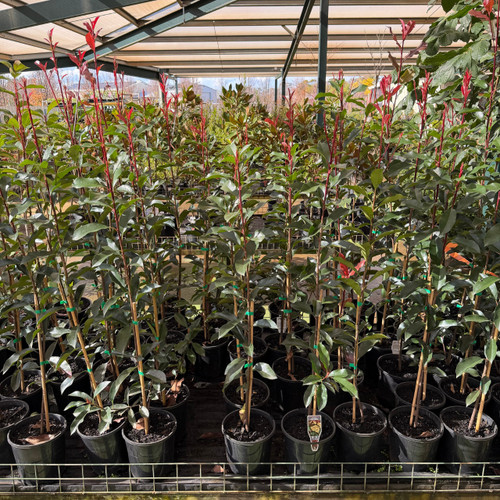
Escallonia x langleyensis Red Knight is an evergreen shrub celebrated for its vibrant red flowers and glossy green foliage. Its dense, bushy habit makes it an excellent choice for hedging, screening, or as a standalone ornamental plant.
Growth:
Red Knight typically reaches a height and width of approximately 2 to 3 metres, making it suitable for medium-sized hedges and garden borders. Its moderate growth rate allows for easy maintenance and shaping.
Light Requirements:
Thrives in full sun to partial shade. While it can tolerate partial shade, full sun exposure promotes optimal flowering and foliage density.
Soil Requirements:
Prefers well-drained soils and is adaptable to a range of soil types, including clay, loam, and sandy soils. It tolerates both acidic and alkaline conditions but performs best in fertile, moist soils.
Water Requirements:
Requires regular watering during the establishment phase. Once established, it is moderately drought-tolerant but benefits from occasional deep watering during prolonged dry periods.
Frost Tolerance:
Hardy to frost and can withstand cold temperatures, making it suitable for a variety of Australian climates.
Drought Tolerance:
Exhibits good drought tolerance once established. However, prolonged dry periods may reduce foliage quality, so supplemental watering during such times is beneficial.
Flowering Information:
Blooms profusely from late spring through summer, producing clusters of deep red, trumpet-shaped flowers that attract pollinators.
Spacing Requirements:
For hedging purposes, space plants approximately 1 to 1.5 metres apart to achieve a dense, continuous hedge. This spacing allows for optimal air circulation and healthy growth.
Fertiliser Requirements:
Escallonia Red Knight generally thrives without the need for regular fertilisation. However, applying a balanced, slow-release fertiliser in early spring can support new growth and enhance flowering, especially if the soil is nutrient-deficient. Avoid over-fertilisation, as it can lead to excessive foliage growth with reduced flowering.
Care and Maintenance:
Minimal maintenance is required. Prune lightly after the main flowering period to maintain the desired shape and encourage bushier growth. Mulching around the base can help retain soil moisture and regulate temperature but should be kept away from the trunk to prevent rot.